
Building a Strong Company Mission and Vision in Nigeria
Every serious business in Nigeria is fighting the same war. The war for talent, the war for customer trust, and the war for long-term survival. Machines, capital, and strategies can be copied, but what sets great companies apart is something deeper: a clearly defined reason for existing and a compelling picture of where they are going.
In many high-performing Nigerian businesses, there is often a unifying sense of purpose that energises teams and fosters shared focus. This is not accidental. It is the result of a carefully cultivated corporate culture anchored in three essential elements: mission, vision, and core values. A company’s mission defines why it exists. Its vision outlines where it intends to go. Its core values guide how it plans to get there. Effective leadership in today’s business environment is no longer just about making smart decisions, managing resources, or executing plans. It is about creating something deeper that transcends routine operations and connects with the very essence of an organisation.
Let me walk you through what this actually means for your business and how you can build a mission and vision that drive growth, attract talent, and create lasting impact.
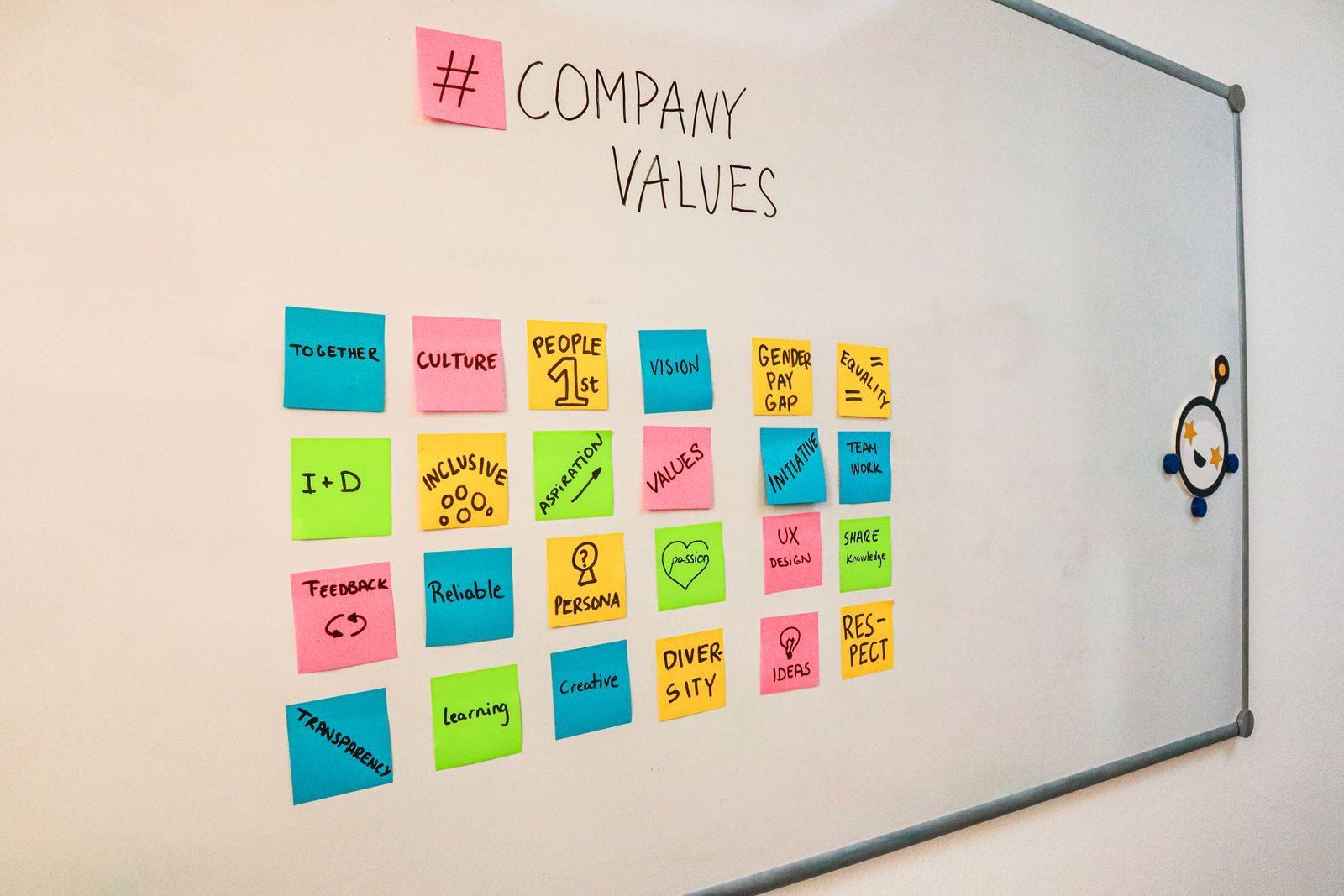
The Pain Points: Why Nigerian Businesses Struggle with Mission and Vision
Every year, Nigerian businesses lose talent, customer trust, and competitive advantage because they fail to articulate and live out a clear mission and vision. The patterns are painfully predictable.
Mission and Vision Are Confused. Many companies have vision statements that read like mission statements, and mission statements that sound like generic corporate slogans. If you cannot tell the difference between your mission and vision statements, you have a problem.
Mission Statements Are Wall Decorations. Many Nigerian businesses treat mission statements as a box-ticking exercise. They look at what successful competitors have written, make a few minor alterations, and call it done. The result? Employees regard such statements as having no consequence. The mission becomes wall decoration rather than a guiding principle.
Employees Cannot Articulate the Purpose. If your employees were asked today to state your company’s mission, could they do so accurately? If not, your mission is not doing its job. Research has shown that when mission, vision, and values are clearly defined and adopted by all members of an organisation, the result is often a highly productive and unified workplace.
Purpose Is Confused with Profit. Purpose in business is often misunderstood. It is not a slogan or a corporate mission statement framed on office walls. It is the underlying reason an organisation exists, beyond making money. Companies that focus primarily on profit never last long.
Vision Is Missing or Unclear. Most companies have vision statements, while very few actually have a vision. A good vision should be audacious yet achievable. It should stretch your organisation but remain believable enough to inspire action. A vision that is too vague or too impossible will not inspire action.
Values Are Not Lived. Core values are the practical principles that guide everyday behaviour and decisions. They define what is acceptable and what is not. But values must be reflected in actions to have any real impact. Without consistent modelling from leadership, values remain empty words.
The Talent Attraction Gap. Talented people do not just look for jobs—they look for purpose. They want to work for businesses that stand for something. When your company has a clear, inspiring mission, it becomes magnetic. Without one, you will struggle to attract the best minds in a competitive labour market.
These pain points are real, but they are not insurmountable. With the right approach, any business can build a mission and vision that drive growth and attract talent.
Understanding the Difference: Mission vs Vision
One of the most common mistakes Nigerian businesses make is confusing mission and vision statements. The distinction is simple but powerful.
Your Mission: Why You Exist Today
Your mission statement defines your core business purpose. It answers the question: “Why do we exist, and what do we do right now?” An effective mission must resonate emotionally with employees and customers. It should clearly identify the problem the business is solving.
Take the Dangote Group. Its mission is “to touch lives by providing their basic needs.” This guides its expansion from cement into food and energy. This purpose-driven focus has helped it dominate a large share of the market.
GTBank provides another clear example. Its mission, “to be the best in class,” is more than a slogan. It is a guiding principle that shapes daily operations and has helped the bank maintain its position as one of Nigeria’s most profitable banks for over a decade.
Even small businesses have experienced growth through meaningful missions. A modest bakery in Lagos saw its sales triple after embracing a simple but honest mission: “nourishing families with affordable, wholesome meals”.
Your Vision: Where You Are Going Tomorrow
While the mission explains the present, the vision points to the future. A good vision statement offers direction and inspires long-term commitment.
Flutterwave offers a striking example. Its vision, “to simplify payments for endless possibilities,” has guided the company’s growth from a Nigerian startup to a pan-African fintech valued at over $3 billion. In 2023, Flutterwave processed over $12 billion in transactions, a direct reflection of its forward-looking vision.
Your Core Values: How You Will Get There
Core values are the practical principles that shape everyday behaviour and decisions. They define what is acceptable and what is not. These values must be reflected in actions to have any real impact.
Access Bank’s emphasis on innovation led it to develop West Africa’s first fully digital bank, aiming to include Nigeria’s underserved population. Similarly, Konga’s commitment to putting customers first is reflected in its 24-hour delivery policy, which distinguishes it from competitors.
Values must be more than words. If a company claims to prioritise integrity but tolerates unethical practices, it will lose credibility with both staff and clients. Establishing a values-based culture starts with leadership. Leaders must model the values they promote. When Tony Elumelu became CEO of UBA, he led by example. He eliminated a huge number of executive privileges, lunched in the staff cafeteria, and held himself accountable to the same standards as everyone else.
Nigerdock, a Nigerian maritime and logistics company, recently unveiled a new vision, mission statement, and values aimed at repositioning the company to meet its diversified operational focus. Under its new vision, Nigerdock is committed to being a leader in providing maritime and logistics infrastructure and strengthening global trade. Its mission is “to deliver seamless supply chain and free zone solutions that bring value to customers while being responsible for our people and the environment”. Its values have been redefined as Integrity, Diversity, Excellence, Accountability, Leadership, and Synergy (IDEALS). This example shows that even established companies recognise the need to periodically revisit and redefine their mission, vision, and values to stay aligned with growth strategies.
Why Mission and Vision Matter for Your Business
They Attract the Best Talent. People are not inspired by what you do, but by why you do it. When your company has a clear, inspiring mission, it becomes magnetic. Build a vision worth believing in and you will never have to beg great people to join you.
They Guide Decision-Making. When you have a clear mission and vision, every decision becomes easier. Does this opportunity align with our purpose? Will this move us closer to our vision? These questions cut through the noise and guide strategic choices.
They Build Customer Trust. A compelling mission unites internal teams and earns customer trust. Customers want to do business with companies that stand for something beyond profit.
They Create Competitive Advantage. Machines, capital, and strategies can be copied, but a deeply held sense of purpose cannot. Your mission and vision are your competitive edge.
They Ensure Long-Term Survival. Companies that focus primarily on profit never last long. Purpose-driven businesses build resilience and endure beyond economic cycles.
They Drive Employee Engagement. When employees are emotionally invested, they want to contribute. A clear mission transforms employees from workers into advocates.
How to Build Your Mission and Vision Statement
Step 1: Start with Why
As Simon Sinek famously said, “People don’t buy what you do; they buy why you do it.” Before you write anything, ask yourself: Why does your business exist beyond making money? What change are you trying to make in the world? What problem are you solving?
Step 2: Define Your Mission
Your mission should answer three questions:
What do we do? (Your products or services)
Who do we serve? (Your customers or beneficiaries)
Why does it matter? (The impact you make)
Keep it clear, concise, and emotionally resonant. Avoid jargon and corporate buzzwords. Authenticity matters more than fancy language.
Step 3: Define Your Vision
Your vision should answer one question: Where are we going? It should be ambitious enough to inspire but believable enough to motivate action. Think 5-10 years ahead. What does success look like?
Step 4: Define Your Core Values
Your values are the principles that guide how you behave. They answer the question: How will we get there? Choose 3-5 values that truly define your culture. Integrity, innovation, customer focus, excellence, and teamwork are common examples, but your values should reflect your unique identity.
Step 5: Involve Your Team
Mission and vision statements should not be written in isolation. Involve your employees in the process. When people contribute to shaping the purpose, they take ownership of it. Research shows that when mission, vision, and values are clearly defined and adopted by all members of an organisation, the result is often a highly productive and unified workplace.
Step 6: Live It Every Day
A mission statement on the wall is worthless. A mission statement lived every day is priceless. Leaders must model the values they promote. Every decision, policy, and action should reflect your mission and vision. Reinforce them in meetings, performance reviews, and daily conversations.
Examples of Nigerian Companies with Strong Mission and Vision
Dangote Group – Mission: “To touch lives by providing their basic needs.” Vision: To be a leading global manufacturing powerhouse while supporting national economic development.
GTBank – Mission: “To be the best in class.” A guiding principle that has shaped daily operations for over a decade.
Flutterwave – Vision: “To simplify payments for endless possibilities.” This vision has guided the company from a startup to a pan-African fintech valued at over $3 billion.
Heirs Holdings – Mission: Africapitalism—the belief that Africa’s private sector can transform the continent. This purpose-driven mission attracts top young Africans who want to contribute to something bigger than a paycheck.
Access Bank – Values: Innovation led to West Africa’s first fully digital bank.
Konga – Values: Customer commitment reflected in its 24-hour delivery policy.
Marketsquare – Vision: “To build a world-class retail business that understood Nigerian consumers, created value for local communities and demonstrated that an indigenous company could compete at the highest level of organised retail”. The vision was born from a simple observation: that Nigerians deserved a better retail experience.
QORAY – Mission: “To drive Africa’s transition to clean energy and sustainable mobility through community, innovation, and partnerships”. Vision: “To be Africa’s most life-changing company”.
So Fresh – Mission: “We inspire and enrich people to live healthier and happier lives”. Vision: “To be the prime destination for people to make clean, safe & healthy food choices”.
EMVC – Mission: “To accelerate Africa’s transition to sustainable, locally driven mobility solutions.” Vision: “Unapologetically industrial; we see Nigeria emerging as a leading hub for electric vehicle manufacturing and innovation in West Africa”.
Seplat Energy – Purpose: “Deliver sustainable energy solutions for society.” Vision: “To transform lives through energy”. Mission: “Leading Nigeria’s energy transition with accessible, affordable and reliable energy that drives social and economic prosperity”.
Summit Bank – Vision: “To become Nigeria’s leading ethical bank that supports stakeholders for shared growth and prosperity.” Mission: “To be the trusted partner providing ethical banking solutions that empower individuals and communities while making a positive impact on stakeholders”.
AIICO Insurance – Vision: “To be the dominant insurer in Sub-Saharan Africa, built on a deep understanding of customer needs and world-class digital experience.” Mission: “To create the most compelling customer experience by offering best-fit products to drive wholesome peace of mind through a dynamic, highly motivated workforce and innovative technology”.
How Qeeva Advisory Helps
At Qeeva Advisory, we understand that a clear mission and vision are the foundation of a successful business. We work with businesses of all sizes to articulate their purpose, define their direction, and build a culture that drives growth.
Our Corporate Strategic Planning Tips for Small Businesses guide provides a comprehensive framework for developing your mission statement, vision, and organisational core values. We help you set the direction for the execution of your corporate planning procedures.
Our Advisory Services provide strategic guidance for articulating your mission and vision, aligning them with your business goals, and building a culture that brings them to life.
Our Strategic Planning services help you connect your mission and vision to actionable strategies. We help you define your goals, assess your current position, and create a roadmap for sustainable growth.
For businesses looking to attract and retain top talent, our Talent Attraction and Retention Advisory can help you build an employer brand that communicates your purpose and values effectively.
Frequently Asked Questions
Q: What is the difference between a mission and a vision statement?
A: Your mission defines why your business exists today and what you do right now. Your vision describes where you intend to go in the future. Think of your mission as your present purpose and your vision as your future destination.
Q: Why do I need both a mission and a vision statement?
A: Your mission keeps you grounded in your purpose today. Your vision pulls you toward your aspirations for tomorrow. Together, they provide both stability and direction.
Q: How long should my mission and vision statements be?
A: Keep them concise. A mission statement should be one or two sentences that clearly articulate your purpose. A vision statement should be equally brief but powerful enough to inspire. Avoid jargon and corporate buzzwords.
Q: What if my mission and vision statements are just words on a wall?
A: If your employees cannot articulate your mission and vision, they are not doing their job. Leaders must model the values they promote. Reinforce your mission and vision in meetings, performance reviews, and daily conversations.
Q: How can Qeeva Advisory help my business build a mission and vision?
A: Qeeva Advisory provides strategic guidance for articulating your mission and vision, aligning them with your business goals, and building a culture that brings them to life. Our Corporate Strategic Planning guide provides a comprehensive framework for developing your mission statement, vision, and organisational core values.
Q: What is the role of core values in mission and vision?
A: Core values are the practical principles that guide everyday behaviour and decisions. They define what is acceptable and what is not. Your values are how you will achieve your mission and realise your vision. They must be reflected in actions to have any real impact.
The Bottom Line
A strong mission and vision are not luxuries for large corporations—they are necessities for every Nigerian business. In a competitive market where talent, capital, and strategies can be copied, your purpose is your competitive edge.
The businesses that articulate and live out a clear mission and vision are the ones that attract the best talent, build customer trust, and survive for the long term. Those that treat mission statements as wall decorations will continue to lose talent, customer trust, and competitive advantage.
The key is to start with why. Define your purpose. Articulate your direction. Live your values every day. And seek professional guidance when needed.
With the right approach and the right support, any business can build a mission and vision that drive growth, attract talent, and create lasting impact.
The choice is yours.
Suggested Reading from Our Blog
Explore these related articles to deepen your understanding of corporate strategy and business growth:
Corporate Strategic Planning Tips for Small Businesses in Nigeria – Learn how to develop a mission statement, vision, and organisational core values as the foundation of your corporate strategic plan.
Strategic Planning for a Regional Bank – Understand how to align your mission and vision with actionable strategies for sustainable growth.
Employee Engagement as a Brand Strategy – Discover how aligning employees with your mission and vision creates a workplace where people feel valued, motivated, and committed.
Related Services
We offer specialised services to help businesses build a strong mission and vision and align them with their growth strategy:
Advisory Services – Strategic guidance for articulating your mission and vision, aligning them with your business goals, and building a culture that brings them to life.
Corporate Strategic Planning – A comprehensive framework for developing your mission statement, vision, and organisational core values.
Strategic Planning – Connect your mission and vision to actionable strategies for sustainable growth.
Talent Attraction and Retention Advisory – Build an employer brand that communicates your purpose and values effectively to attract and retain top talent.
Employee Engagement – Align your employees with your mission and vision to create a motivated, productive workforce.
Let’s Talk About Your Mission and Vision
Your mission and vision are not just words on a wall—they are the foundation of your business. At Qeeva Advisory, we take the time to understand your unique business and help you articulate a purpose that inspires and a direction that guides.
Whether you need help with defining your mission, crafting your vision, or aligning your strategy, our team is here to support you.
📞 Call us: (+234) 802 320 0801, (+234) 807 576 5799
📧 Email: info@qeeva.com
📍 Visit us: 5, Ishola Bello Close, Off Iyalla Street, Alausa, Ikeja, Lagos, Nigeria
Contact us today to schedule a complimentary consultation. We would love to hear about your business and explore how we can help you build a mission and vision that drive growth and create lasting impact.
Your journey to purpose-driven business starts with a conversation. Let’s talk.
Reference Links
Harnessing mission, vision, and values for sustainable business growth – BusinessDay NG
Nigerdock moves to align with growth plan, meet diverse operational focus – BusinessDay NG
Building a Strong Company Mission and Vision in Nigeria – Matog Consulting
Attracting the Best from the Labour Market – StocksWatch
Corporate Strategic Planning tips for small businesses in Nigeria – Qeeva