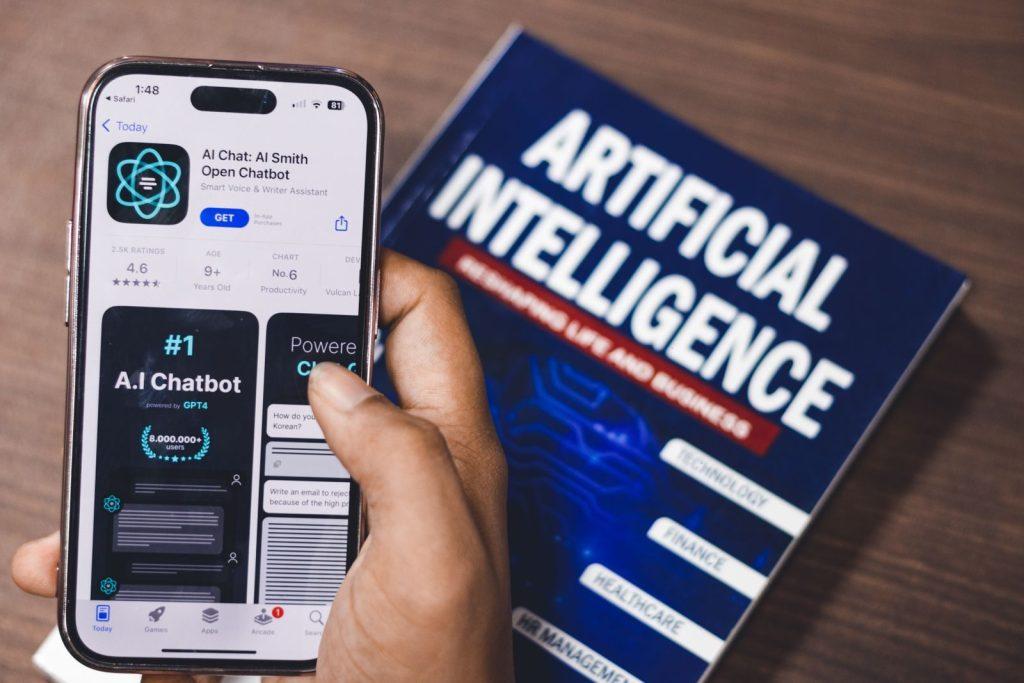
HOW ARTIFICIAL INTELLIGENCE IS TRANSFORMING ACCOUNTING
Introduction
Artificial intelligence is no longer a futuristic concept in accounting—it is an operational reality. Across the profession, AI agents are being deployed to handle tasks that once consumed hours of manual effort: reconciling bank accounts, processing invoices, preparing expense reports, and generating financial statements.
The shift is significant. ICAEW’s 2026 analysis notes that the development and use of AI agents has “significantly increased this year, driven not just by accounting firms, but software vendors who are incorporating agents into audit, accounting and finance software” . The Big Four firms—PwC, KPMG, Deloitte, and EY—have all launched AI platforms and agent systems designed to integrate with business workflows and automate routine finance work .
Yet adoption is uneven. Globally, only 4% of finance teams have moved beyond AI pilots . In Nigeria, small and medium-sized practices remain cautious, constrained by currency fluctuations that make subscription software expensive and a preference for technologies that prove stable before adoption .
At Qeeva Advisory, we understand that AI transformation in accounting is not about replacing accountants—it is about redefining what they do. Our team helps Nigerian finance teams navigate the adoption journey, from identifying high-value use cases to implementing controls that ensure accuracy and compliance.
This comprehensive guide examines how AI is transforming accounting, covering the key applications, the Nigerian adoption landscape, the barriers to implementation, and how Qeeva Advisory helps businesses adapt.

The Pain Points: Why AI Adoption Matters Now More Than Ever
The Efficiency Gap
Manual accounting processes consume time that could be spent on higher-value work. Reconciliation, data entry, invoice processing, and report generation are repetitive, error-prone, and slow. AI offers the potential to automate these tasks, freeing finance teams for analysis, strategy, and advisory work .
The Talent Shift
AI is reshaping the talent landscape in finance. Gartner predicts that by 2029, nearly one-third of finance roles will depend on human-AI collaboration, shifting the traditional bottom-heavy finance pyramid into a diamond shape . Entry-level roles are being eliminated or transformed, and the skills required for success are changing.
The Nigerian Caution
Nigerian firms have been cautious about AI adoption. As Adeniyi Bamgboye, managing partner of Empyrean Professional Services in Nigeria, explains: “The general stance among small firms is cautious observation. Resource constraints and unreliable platforms have encouraged scepticism” . Subscription-based software can become prohibitively expensive due to currency fluctuations, so firms prioritise technology investments that clearly reduce manual work or regulatory risk .
The Return on Investment Question
Questions are hanging over the health of return on investment from AI expenditure. A Deloitte survey found that most respondents achieve satisfactory ROI on a typical AI use case within two to four years—significantly longer than the seven to twelve months expected from other technology investments . A report from MIT noted that despite $30bn to $40bn of global enterprise investment in Gen-AI, 95% of organisations are seeing zero returns .
How AI is Transforming Accounting
1. AI Agents in Finance Workflows
AI agents are autonomous or semi-autonomous systems that can perform defined tasks within finance workflows. Unlike traditional automation, which follows fixed rules, AI agents can interpret information, identify exceptions, and recommend actions .
Key applications:
-
Reconciliation – Matching bank transactions, identifying discrepancies, and flagging exceptions
-
Invoice processing – Extracting data from invoices, coding to the correct accounts, and routing for approval
-
Expense management – Reviewing expense reports for policy compliance and anomalies
-
Cash application – Matching customer payments to invoices and applying cash accurately
The Big Four have launched significant agent platforms. PwC’s agent OS integrates with enterprise solutions like Oracle and Salesforce to connect AI agents into business workflows. KPMG’s Workbench provides a network of AI assistants and chatbots. Deloitte’s Omnia platform includes Gen-AI tools for enhanced document review and financial statement navigation. EY’s AI Tax Labs and Tax Agent Factory link tax advisory with compliance and operations .
2. Automated Financial Reporting and Analysis
AI is being used to generate financial statements, analysis, and ad-hoc reports based on natural language commands. Microsoft’s Copilot in Excel, for example, can clean up raw data, create formulas and charts, and provide insights in response to simple text or voice commands .
Accounting software providers are incorporating similar capabilities, using AI to create financial statements and analysis that previously required manual preparation. While the technology is not yet perfect, it is improving rapidly and is already capable of performing work that would otherwise consume accountant hours .
3. Tax Compliance Automation
In Nigeria, AI is being applied to tax compliance. TaxStreem, launched in March 2026, uses AI to automate tax calculation and compliance by interpreting financial transactions in real time . The platform connects to business bank accounts and fintech platforms, reads transaction descriptions, assigns the correct tax treatment, and provides an explanation for the decision.
The system includes a calculation engine trained on Nigerian tax legislation, an automated filing system that accesses government portals, and an invoicing tool that checks for tax calculation errors and TIN issues. A chatbot answers tax questions and interprets business performance .
This is particularly relevant as Nigeria’s tax administration becomes increasingly digital. The new tax regime requires small businesses to use electronic invoicing from July 2027, making automated tax compliance a strategic necessity .
4. Forensic Accounting and Fraud Detection
AI is being adopted in forensic accounting practices in Nigeria. Research on adoption and implementation found that perceived usefulness, organizational culture, and regulatory framework are significant determinants of AI adoption in forensic accounting .
Machine learning algorithms can analyse complete populations of financial transactions, identify unusual patterns indicative of fraud, and support more effective audit planning than traditional sampling techniques . Continuous auditing and predictive analytics enhance the accuracy, timeliness, and reliability of financial reporting.
5. Research and Knowledge Work
AI tools are transforming how accountants conduct research. Perplexity, for example, provides tax and accounting research with real sources, while ChatGPT can draft reports, commentary, and memos in minutes . For Nigerian accountants, AI-powered research tools can quickly summarise legislation and regulations, reducing the time spent searching through documents.
6. Cloud Accounting and Real-Time Visibility
Cloud accounting platforms like QuickBooks and Xero, combined with AI capabilities, provide real-time visibility into financial performance. Clients can see reports live, and accountants can access books from anywhere . AI-powered e-tax portals can flag errors before submission, auto-calculate penalties, and generate Tax Clearance Certificates in minutes .
The Nigerian Adoption Landscape
Cautious Observation
Nigerian small and medium-sized practices have adopted a cautious approach to AI. Bamgboye notes that many firms “monitor which technologies prove stable and compliant before integrating them into their workflow” . The decision to purchase software is justified only if it clearly reduces billable hours spent on manual tasks or directly mitigates the risk of regulatory penalties .
The Role of Professional Bodies
The Institute of Chartered Accountants of Nigeria (ICAN) has reaffirmed its commitment to strengthening AI training to equip accountants with the skills needed to remain competitive . This reflects a recognition that AI competency is becoming essential for the profession.
Research Evidence
Research on AI in Nigerian banking firms found that accountants’ perceptions of the opportunities created by AI had a positive and statistically significant relationship with financial reporting practices . This suggests that favourable perceptions are more strongly associated with improved practices than experience or implementation challenges alone. The study concluded that Nigerian firms should strengthen AI awareness, professional training, technological support, and organisational integration .
Local Innovation
Nigerian fintech startups are building AI tools for finance teams. Bujeti, a YC-backed startup, launched Brain, an agentic AI platform with four AI “teammates” that handle routine finance work: Fetch (finds invoices and receipts), Chaser (runs invoice collections), Watchdog (scans transactions for risks), and Concierge (answers staff finance questions). The platform is used by more than 2,000 finance professionals in Nigeria and Kenya .
Critically, no “teammate” has standing authority to move money. Low-confidence actions go to a human, every action is logged, and customer data is not used to train outside models .
Barriers to AI Adoption
Cost and Currency Fluctuation
In Nigeria, subscription-based software can become prohibitively expensive as a result of currency fluctuations. Firms prioritise investments that clearly reduce manual work or regulatory risk .
Skills Shortages
Several barriers to AI adoption have been identified globally, including skills shortages, concerns about AI risks, and the regulatory environment . In Nigeria, the gap between AI awareness and practical implementation remains significant.
Data Quality and Infrastructure
AI systems require clean, structured data to function effectively. Many Nigerian businesses still operate with fragmented data, manual records, and disconnected systems. Without a solid data foundation, AI adoption delivers limited value.
Trust and Verification
AI-generated outputs may contain biases or inaccuracies if developed using incomplete or poor-quality datasets. Human oversight and professional judgment remain indispensable . The Deloitte incident in Australia, where hallucinated references crept into a government report, illustrates the risks of relying on Gen-AI without adequate verification .
ROI Uncertainty
The long payback period for AI investments—two to four years compared to seven to twelve months for other technologies—creates uncertainty for businesses accustomed to faster returns .

How Qeeva Advisory Helps with AI Transformation in Accounting
At Qeeva Advisory, we understand that AI transformation is not about adopting every new tool—it is about identifying where AI can deliver measurable value, implementing it with proper controls, and building the skills to use it effectively.
Our Core Services
Financial Transformation & Automation – We help finance teams identify high-value automation opportunities, redesign workflows, and implement AI tools that deliver measurable efficiency gains.
Internal Control Advisory Service – We help you design controls for AI-augmented processes, ensuring accuracy, auditability, and compliance.
Risk Management Services – We help you assess and mitigate the risks associated with AI adoption, including data quality, model risk, and regulatory compliance.
Bookkeeping Services – We help you build the clean, structured data foundation that AI tools require to function effectively.
Tax Advisory Services – We help you leverage AI for tax compliance, research, and planning while maintaining professional oversight.
Advisory Services Nigeria – Our advisory professionals provide strategic guidance on finance transformation, technology selection, and change management.
Our AI Transformation Methodology
Phase 1: Opportunity Assessment – We assess your current processes, identify high-friction, high-volume tasks that are candidates for AI automation, and evaluate potential ROI.
Phase 2: Data Foundation – We help you build the clean, structured data foundation that AI tools require. Without accurate data, AI delivers limited value.
Phase 3: Tool Selection and Implementation – We help you select AI tools that meet your needs and budget, and support implementation with proper controls and oversight.
Phase 4: Skills Development – We train your team on AI tools and the new ways of working that AI enables.
Phase 5: Monitoring and Optimisation – We track performance, identify issues, and help you optimise AI-augmented processes over time.
Frequently Asked Questions
Q: Will AI replace accountants?
A: AI is more likely to redefine accounting roles than eliminate them. Automation handles routine tasks, enabling accountants to focus on strategic financial analysis, governance, advisory services, and risk management . However, entry-level roles are being affected, and the skills required for success are changing .
Q: What are the most common AI applications in accounting?
A: AI agents for reconciliation, invoice processing, expense management, cash application, automated financial reporting, tax compliance automation, forensic accounting, and research .
Q: How are Nigerian firms adopting AI?
A: Nigerian firms have been cautious, prioritising technologies that clearly reduce manual work or regulatory risk. Currency fluctuations make subscription software expensive, so ROI justification is essential . Local fintech startups like Bujeti are building AI tools for African finance teams .
Q: What is the return on investment for AI in accounting?
A: Globally, most respondents achieve satisfactory ROI on a typical AI use case within two to four years—longer than the seven to twelve months expected from other technology investments .
Q: What are the main barriers to AI adoption?
A: Cost and currency fluctuation (in Nigeria), skills shortages, data quality issues, trust and verification concerns, and ROI uncertainty .
Q: How can Qeeva Advisory help with AI transformation?
A: We provide opportunity assessment, data foundation building, tool selection, implementation support, skills development, and ongoing optimisation. Our services help you adopt AI in a way that delivers measurable value while maintaining control and compliance.
The Bottom Line
Artificial intelligence is transforming accounting—not by replacing accountants, but by changing what they do. Routine tasks are being automated, and the profession is shifting toward analysis, advisory, and strategic work. In Nigeria, adoption is cautious but accelerating, driven by local innovation, professional body initiatives, and the recognition that AI competency is becoming essential.
Key Takeaways:
AI is Real and Operational – AI agents are being deployed in reconciliation, invoice processing, tax compliance, and reporting .
Adoption is Uneven – Only 4% of finance teams globally have moved beyond pilots . Nigerian firms are cautious but increasingly aware .
ROI Takes Time – AI investments may take two to four years to deliver satisfactory returns .
Data Foundation is Critical – AI requires clean, structured data to function effectively. Without it, adoption delivers limited value.
Human Oversight Remains Essential – AI outputs require verification. Professional judgment cannot be automated .
Your job is to be prepared. Assess your opportunities. Build your data foundation. Select the right tools. Develop your skills. Seek professional guidance.
With the right approach and the right partner, you can turn AI from a source of uncertainty into a driver of efficiency and insight.
Suggested Reading from Our Blog
Business Transformation Improvement – We help you redesign processes and implement technology that eliminates manual work and accelerates performance.
Internal Control Advisory Service – We help you design controls for AI-augmented processes, ensuring accuracy and auditability.
Risk Management Services – We help you assess and mitigate the risks associated with AI adoption.
Bookkeeping Services – We help you build the clean, structured data foundation that AI tools require.
Tax Advisory Services – We help you leverage AI for tax compliance and planning.
Advisory Services Nigeria – Strategic guidance on finance transformation and technology selection.
Month-End Close Acceleration Burndown – AI can accelerate the close. Learn how to compress your close cycle.
Forensic Accounting & Security Analysis – AI is being adopted in forensic accounting for fraud detection and investigation .
Reference Links / Sources
Qeeva Advisory – Business Transformation Improvement – Process redesign and technology implementation.
Qeeva Advisory – Internal Control Advisory Service – Controls for AI-augmented processes.
Qeeva Advisory – Risk Management Services – AI adoption risk assessment and mitigation.
Qeeva Advisory – Bookkeeping Services – Data foundation for AI tools.
Qeeva Advisory – Tax Advisory Services – Tax compliance and planning with AI leverage.
Qeeva Advisory – Advisory Services Nigeria – Finance transformation and technology selection.
Qeeva Advisory – Month-End Close Acceleration Burndown – Close cycle acceleration with automation.
Qeeva Advisory – Forensic Accounting & Security Analysis – AI in forensic accounting and fraud detection.
Let’s Talk About Your AI Transformation Needs
AI is transforming accounting, and Nigerian businesses that adopt it effectively will gain efficiency, insight, and competitive advantage. At Qeeva Advisory, we understand the challenges and opportunities of AI adoption.
Whether you need help with opportunity assessment, tool selection, implementation support, or skills development, we are here to support you.
📞 Call us: (+234) 802 320 0801, (+234) 807 576 5799
📧 Email: info@qeeva.com
📍 Visit us: 5, Ishola Bello Close, Off Iyalla Street, Alausa, Ikeja, Lagos, Nigeria
Contact us today to schedule an AI transformation consultation. Let us help you navigate the AI revolution with confidence.
Your journey to AI-augmented finance starts with a conversation. Let’s talk.