BUSINESS CONTINUITY & DISASTER RECOVERY
Introduction
In a world of fuel price fluctuations, volatile foreign exchange markets, sudden regulatory shifts, power outages, and increasing cyber threats, business continuity planning has become essential for survival . A generator is not a business continuity plan. Neither is a backup that has never been restored .
Business continuity is more than disaster recovery. It is a proactive approach to ensure critical operations continue, even in the face of unexpected disruptions—whether a power outage, cash crunch, or policy change . Disaster recovery, by contrast, focuses on restoring systems and data after a disruption. Together, they determine whether a business bounces back quickly or shuts down permanently.
The evidence from Nigerian businesses is sobering. A study of SMEs found that only 14.4% had written business continuity plans. Among those that experienced climate-related disruptions, 23% required more than three months to recover pre-disaster revenue levels, and 4.4% closed permanently within 12 months after floods. Firms younger than three years had 3.1 times higher odds of closure . Only 9% had any form of insurance .
Yet the businesses that did have continuity plans scored 0.273 points higher on a Business Continuity Index, controlling for hazard exposure . Planning works. The challenge is that most businesses do not do it.
At Qeeva Advisory, we understand that business continuity and disaster recovery are not bureaucratic exercises—they are survival disciplines. Our team helps Nigerian businesses identify critical operations, map dependencies, set recovery targets, and build plans that actually work when disruption hits.
This comprehensive guide examines business continuity and disaster recovery for Nigerian businesses, covering the Business Impact Analysis, recovery objectives, power and connectivity resilience, cyber resilience, key-person risk, and how Qeeva Advisory helps businesses build operational resilience.
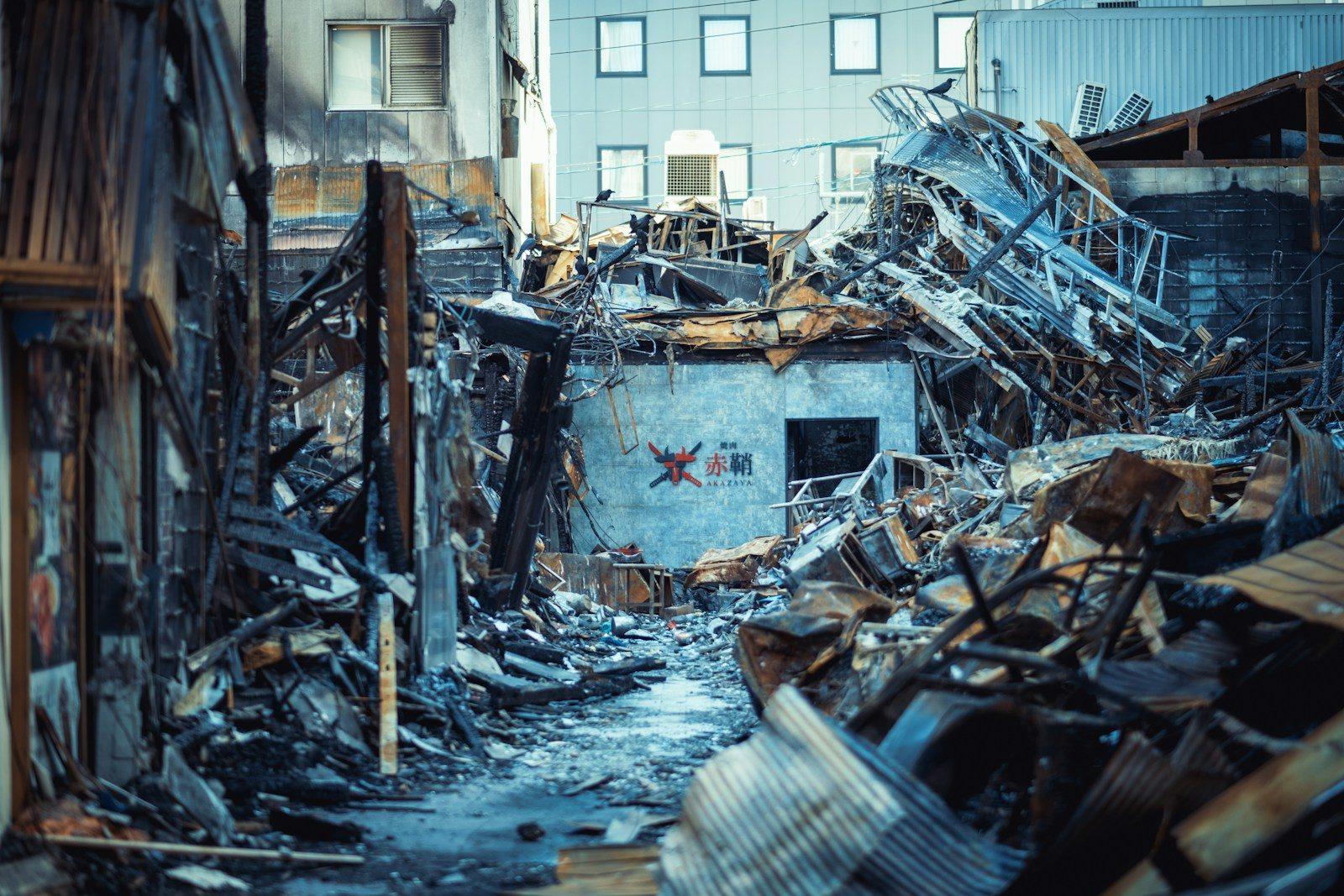
The Pain Points: Why Continuity Planning Matters Now More Than Ever
The Vulnerability of Nigerian SMEs
Many Nigerian SMEs operate without safety nets, emergency funds, or backup systems. The impact of the naira redesign, fuel shortages, and sudden regulatory shifts has demonstrated just how vulnerable small businesses are . Most SMEs that close down do not fail because they have a bad product. They fail because something unexpected happened, and they did not have a plan to keep moving .
The Climate Reality
Climate risk is not a future projection for Nigerian SMEs—it is an operational reality. Between 2020 and 2025, 67.2% of surveyed SMEs reported at least one climate-related disruption. Flooding affected 42%, extreme heat 38%, erratic rainfall 29%, and drought 18%. Lagos had the highest exposure at 81%, followed by Abuja at 64% and Kano at 56% .
The financial impact is severe. SMEs reporting flood impacts lost an average of ₦1.18 million per event. Retail and food vendors experienced losses of ₦1.64 million compared to ₦680,000 for service firms. For every additional 10 days above 35°C, monthly revenue declined by 12% in the Kano subsample .
The Regulatory Requirement for Telecoms
For businesses in the telecommunications sector, disaster recovery planning is not optional. The Nigerian Communications Commission (NCC) requires all network operators and service providers to formulate and submit a Disaster Recovery Plan following the checklist outlined in the 2023 Guideline on Disaster Recovery. The Commission has reiterated that the Guidelines remain in force and that it stands ready to utilize its enforcement authority to ensure compliance .
The NCC’s Cyber Resilience Framework (CRF-NCS) further mandates business continuity management as a policy requirement for all licensees, with recovery time and recovery point objectives, business continuity drills, and post-incident learning treated as first-class requirements .
The Cyber Threat
The NCC’s Cyber Resilience Framework applies to every entity licensed under the Nigerian Communications Act, organised into three risk tiers. It mandates a named, NCC-notified accountable officer at every provider, a strict incident-reporting clock (4 hours to first notify, 24 hours to confirm), and explicit requirements around cloud risk, network slicing, and post-quantum cryptography. Full compliance is due by 23 February 2027 .
Even for businesses outside the telecom sector, cyber threats are a continuity risk. A ransomware attack or data breach can halt operations, compromise customer data, and trigger regulatory penalties under the Nigeria Data Protection Act.
Understanding Business Continuity vs. Disaster Recovery
Business Continuity
Business continuity is your “Plan B” for when life happens. It is the answer to the question: “If my office burns down tonight, how do I sell to my customers tomorrow morning?” . It is not just about insurance—insurance gives you money after the disaster. Business continuity keeps you working during the disaster .
Business continuity encompasses:
-
Identifying critical operations and dependencies
-
Setting recovery targets
-
Preparing workarounds for power, connectivity, supply, and people disruptions
-
Documenting and communicating the plan
-
Testing and improving the plan
Disaster Recovery
Disaster recovery is a subset of business continuity. It focuses specifically on restoring technology systems and data after a disruption. The NCC defines disaster recovery as “the putting in place procedures to be undertaken to restore normalcy of operations in the aftermath of disasters, and includes identifying the recovery strategies for all critical business functions, establishing recovery management organization and process, and creating recovery plans for various levels of business functions” .
The Relationship
Disaster recovery is what you do for your IT systems. Business continuity is what you do for your entire business—people, processes, suppliers, cash flow, and customer communication. A business can recover its servers and still fail because it cannot reach its customers, pay its staff, or source its inventory.
The Business Impact Analysis (BIA)
What It Is
The Business Impact Analysis is the foundation of any continuity plan. It does not have to be complex. It is simply listing key products, services, people, and processes, and asking: If this stopped today, how long could I stay afloat? .
What to Map
List products and services, then ask how their interruption affects people, customers, cash, contracts, reputation, and legal obligations after two hours, one day, three days, and one week. Identify the maximum tolerable disruption and the minimum level of service that must continue .
For each priority activity, map dependencies :
-
Named people and specialist knowledge – Who knows how to do this? What happens if they are unavailable?
-
Electricity, fuel, connectivity, and communications – What powers this activity? What connects it?
-
Premises, equipment, and vehicles – Where does this happen? What physical assets are required?
-
Applications, data, and credentials – What systems are needed? Where are the passwords?
-
Suppliers, couriers, payment providers, and banks – Who else must perform for this to work?
-
Working capital and customer payments – What cash is needed? When does it arrive?
Setting Recovery Targets
Two targets drive recovery planning :
Recovery Time Objective (RTO) – The target time to restore a service or system. How long can this be down before the impact becomes unacceptable?
Recovery Point Objective (RPO) – The amount of data loss the business can tolerate, expressed in time. A business that can recreate one day of enquiries has a different backup need from one that cannot lose a single paid order.
Targets should be realistic and funded. “Immediate recovery” sounds safe but may require costly duplication. Match protection to customer, financial, and safety impact .
Building the Continuity Plan
Step 1: Prepare for Power and Connectivity Disruption
Power outages are a fact of life in Nigeria. Continuity planning means preparing for them systematically :
-
Identify the critical electrical load instead of trying to power everything
-
Maintain generators, inverters, solar systems, and safe fuel arrangements
-
Test runtime under load and document the switching procedure
-
Use at least one alternative internet path for priority work where feasible
-
Keep approved offline forms or procedures for short outages
-
Protect equipment from unsafe shutdown, surges, and improvised wiring
Record who may authorize workarounds and how offline transactions will be reconciled without duplication when systems return .
Step 2: Reduce Supplier and Inventory Concentration
Over-dependence on a single supplier, payment method, product, or major client is a fast track to collapse . SMEs should source from more than one vendor, offer multiple payment options (bank transfer, POS, USSD, QR codes), and explore alternative sales channels .
For continuity planning :
-
Identify single-source inputs, long lead times, and suppliers whose failure would stop the business
-
Prequalify alternatives, keep current contacts, understand substitute specifications
-
Set trigger levels for critical stock
-
Share forecasts and constraints with important suppliers
Step 3: Protect Data and Access
Maintain supported systems, strong multifactor authentication, and role-based access. Keep tested backups that cannot all be altered by the same compromised administrator or ransomware event. Document how to restore priority applications, where clean credentials are held, and who can contact the provider .
Prepare a paper or offline contact list for response leaders, technology support, insurers, banks, landlords, critical suppliers, and key customers. A plan stored only inside the unavailable system is not available .
Step 4: Plan for Key-Person Absence
In many Nigerian SMEs, only “Oga” knows how to do certain things. This is dangerous. If Oga is stuck in traffic or falls ill, the business stalls .
List decisions and tasks that only one person can complete. Create deputies, controlled access to essential information, current procedures, and a handover rhythm. Separate duties for sensitive payments and approvals; continuity should not weaken fraud controls . Cross-train staff, enabling them to step into each other’s roles .
Step 5: Build a Cash-Flow Continuity Layer
Since disruptions come with immediate costs (repairs, stock replacement, salary coverage), a small financial cushion can be the difference between shutting down and staying open . SMEs should set aside a portion of profits monthly and explore cooperative or micro-savings platforms .
Model how a disruption affects sales, collections, payroll, supplier payments, and emergency costs. Maintain a current receivables list, prioritize critical payments, understand available facilities, and agree who can approve exceptional spending. Communicate early with customers and lenders; silence usually reduces options .
Step 6: Create a Short Incident Structure
Define the trigger, incident lead, operations lead, communications lead, and technology or facility support. State who can stop unsafe work, activate an alternative site, contact customers, approve spending, and declare recovery .
The plan should answer :
-
What happened and is anyone unsafe?
-
Which priority service is affected?
-
What decision is required now?
-
Who needs accurate information?
-
Which workaround is approved?
-
What evidence and transactions must be recorded?
-
What conditions allow a safe return to normal?
Step 7: Test the Plan
Run a quarterly tabletop scenario and focused technical tests throughout the year. Examples include restoring a sample backup, operating a priority workflow on backup power, reaching the response team, switching internet connection, processing an offline order, and responding to an unavailable supplier .
Each exercise should record the expected result, actual result, gaps, owner, and correction date. A failed test is valuable when it leads to a safer plan .

Cyber Resilience as Continuity
For businesses in regulated sectors—particularly telecommunications—cyber resilience is now a formal continuity requirement.
The NCC’s Cyber Resilience Framework (CRF-NCS), issued in February 2026, is built on five pillars: Governance and Compliance, Risk Management, Cybersecurity Measures, Incident Response and Resilience, and Capacity Building and Awareness. It is “genuinely resilience-first, not just ‘prevent breaches.’ Recovery time and recovery point objectives, business continuity drills, and post-incident learning are treated as first-class requirements, not an afterthought” .
The framework mandates:
-
A named, NCC-notified accountable officer (CISO or equivalent) at every provider
-
Strict incident-reporting clock: 4 hours to first notify, 24 hours to confirm
-
Explicit requirements around cloud/virtualization risk and post-quantum cryptography
-
Full compliance due by 23 February 2027, with phased checkpoints at 6, 9, and 12 months
For businesses outside the telecom sector, the principles remain relevant: identify critical systems, set recovery targets, test restoration, and learn from incidents.
The Lagos State Model: Public Sector Continuity
The Lagos State Resilience Office (LASRO) has been implementing Business Continuity Plans across Ministries, Departments, and Agencies since the lessons of COVID-19 and the EndSARS unrest. The 2026 cycle marks the fifth phase of the initiative, expanding continuity planning to four new MDAs while conducting tabletop testing exercises with 16 existing MDAs .
The exercise focuses on mapping core departmental operations and critical functions, assessing risks and operational bottlenecks, reviewing existing emergency protocols, and building a data-driven foundation for a seamless statewide continuity strategy .
This public-sector model demonstrates that continuity planning is not just for private businesses—it is a governance imperative for any organization responsible for critical services.
Common Continuity Planning Pitfalls
1. Relying on “Vibes” Management. Hoping things will work out instead of having a structured plan .
2. Single Points of Failure. Having only one supplier, one major client, or one person who knows the password to the bank account .
3. No Backups. Keeping all records in a physical ledger that can be lost in a fire, damaged by pests, or misplaced during a move .
4. No Financial Buffer. Operating without emergency funds or backup systems .
5. Treating a Generator as a Plan. A generator is not a business continuity plan. Neither is a backup that has never been restored .
6. Not Testing. A plan that has never been tested is an assumption, not a capability. Failed tests are valuable when they lead to a safer plan .
7. Not Documenting and Communicating. A disruption often escalates because teams are unsure what to do. The plan must be shared, understood, and easy to activate .
How Qeeva Advisory Helps with Business Continuity & Disaster Recovery
At Qeeva Advisory, we understand that continuity planning is not about surviving the disaster—it is about building the discipline that keeps your business running when disruption hits. Our team helps Nigerian businesses assess their vulnerabilities, build practical continuity plans, and test them before they are needed.
Our Core Services
Business Continuity & Disaster Recovery Advisory – We help you conduct Business Impact Analyses, set recovery targets, design continuity plans, and test your readiness.
Risk Management Services – We help you identify, assess, and mitigate operational, climate, cyber, and supply chain risks that threaten continuity.
Internal Control Advisory Service – We help you design controls that support continuity, including backup procedures, access controls, and reconciliation protocols.
ICFR Advisory Service – We help you ensure that financial reporting controls remain effective during and after disruptions.
Advisory Services Nigeria – Our advisory professionals provide guidance on continuity strategy, regulatory compliance, and operational resilience.
Our Continuity Planning Methodology
Phase 1: Business Impact Analysis – We help you map critical operations, identify dependencies, and assess the impact of disruption at 2 hours, 1 day, 3 days, and 1 week.
Phase 2: Recovery Target Setting – We help you define realistic Recovery Time Objectives (RTO) and Recovery Point Objectives (RPO) for each critical function.
Phase 3: Plan Design – We help you design workarounds for power, connectivity, supplier, cash flow, key-person, and cyber disruptions.
Phase 4: Documentation and Communication – We help you create a clear, actionable plan that can be activated by staff, partners, and vendors.
Phase 5: Testing and Improvement – We facilitate tabletop exercises and technical tests, document gaps, and support continuous improvement.
Phase 6: Regulatory Compliance Support – For regulated businesses, we help ensure continuity plans meet NCC, NDPA, and other regulatory requirements.
Frequently Asked Questions
Q: What is the difference between business continuity and disaster recovery?
A: Business continuity is the overall capability to keep critical operations running during and after disruption. Disaster recovery focuses specifically on restoring technology systems and data. Disaster recovery is a subset of business continuity .
Q: What is a Business Impact Analysis?
A: A Business Impact Analysis (BIA) identifies critical operations and assesses the impact of their disruption over time. It does not have to be complex—it is simply listing key products, services, people, and processes and asking: “If this stopped today, how long could I stay afloat?” .
Q: What are RTO and RPO?
A: Recovery Time Objective (RTO) is the target time to restore a service or system. Recovery Point Objective (RPO) is the amount of data loss the business can tolerate, expressed in time .
Q: Do Nigerian businesses need a written continuity plan?
A: Yes, but the plan does not need to be technical. It can be a simple checklist outlining steps for common disruptions. What matters is clarity: who to contact first, what the backup options are, and where essential documents are stored .
Q: Are telecom companies required to have disaster recovery plans?
A: Yes. The Nigerian Communications Commission requires all network operators and service providers to formulate and submit a Disaster Recovery Plan following the 2023 Guideline on Disaster Recovery. The Commission has enforcement authority for non-compliance .
Q: What is the NCC Cyber Resilience Framework?
A: The CRF-NCS is a framework for Nigeria’s telecom sector that mandates cyber resilience requirements including business continuity management, recovery objectives, incident reporting, and post-incident learning. Full compliance is due by 23 February 2027 .
Q: How can Qeeva Advisory help with business continuity?
A: We provide Business Impact Analysis, recovery target setting, plan design, documentation, testing, and regulatory compliance support. Our services help you build a plan that works when disruption hits.
The Bottom Line
Business continuity and disaster recovery are not administrative burdens—they are survival disciplines. In Nigeria’s volatile environment, businesses that identify their critical operations, prepare workable alternatives, and test their plans will survive disruptions that close their competitors.
Key Takeaways:
Start with a BIA – Know what you cannot afford to lose. Map dependencies. Set recovery targets.
Prepare for Power and Connectivity – Identify critical loads, test runtime, maintain alternative internet paths, and document workarounds.
Reduce Concentration – Diversify suppliers, payment methods, and sales channels. Do not depend on a single point of failure.
Protect Data – Maintain tested backups, strong access controls, and offline contact lists.
Plan for Key-Person Absence – Cross-train staff. Document procedures. Create deputies.
Build a Cash Buffer – Even a modest cushion can mean the difference between surviving and shutting down.
Test the Plan – A plan that has never been tested is an assumption. Run tabletop exercises and technical tests.
Your job is to be prepared. Map your critical operations. Set recovery targets. Build workarounds. Test the plan. Seek professional guidance.
With the right approach and the right partner, you can turn business continuity from a source of anxiety into a foundation of operational resilience.
Suggested Reading from Our Blog
Business Continuity & Disaster Recovery Advisory – We help you conduct Business Impact Analyses, set recovery targets, design continuity plans, and test your readiness.
Risk Management Services – We help you identify, assess, and mitigate operational, climate, cyber, and supply chain risks.
Internal Control Advisory Service – We help you design controls that support continuity, including backup procedures and reconciliation protocols.
ICFR Advisory Service – We help you ensure that financial reporting controls remain effective during and after disruptions.
SME Financial Stability Scorecard – Assess your financial stability across liquidity, solvency, profitability, and efficiency.
SME Financial Governance – Build the internal controls and oversight structures that support resilience.
Treasury Management & Cash Management – Build liquidity buffers and cash flow forecasts that support continuity.
Advisory Services Nigeria – Strategic guidance on continuity strategy, regulatory compliance, and operational resilience.
Reference Links / Sources
Qeeva Advisory – Business Continuity & Disaster Recovery Advisory – BIA, recovery targets, plan design, testing, and compliance support.
Qeeva Advisory – Risk Management Services – Risk identification, assessment, and mitigation.
Qeeva Advisory – Internal Control Advisory Service – Controls for backup, access, and reconciliation.
Qeeva Advisory – ICFR Advisory Service – Financial reporting controls during disruption.
Qeeva Advisory – SME Financial Stability Scorecard – Financial health assessment.
Qeeva Advisory – SME Financial Governance – Internal controls and financial discipline.
Qeeva Advisory – Treasury Management & Cash Management – Liquidity buffers and cash flow forecasting.
Qeeva Advisory – Advisory Services Nigeria – Continuity strategy and regulatory compliance.
Let’s Talk About Your Business Continuity Needs
Building operational resilience is essential for surviving disruptions, protecting stakeholders, and sustaining growth. At Qeeva Advisory, we understand the continuity challenges faced by Nigerian businesses.
Whether you need help with Business Impact Analysis, recovery planning, testing, or regulatory compliance, we are here to support you.
📞 Call us: (+234) 802 320 0801, (+234) 807 576 5799
📧 Email: info@qeeva.com
📍 Visit us: 5, Ishola Bello Close, Off Iyalla Street, Alausa, Ikeja, Lagos, Nigeria
Contact us today to schedule a business continuity consultation. Let us help you build a plan that works when disruption hits.
Your journey to operational resilience starts with a conversation. Let’s talk