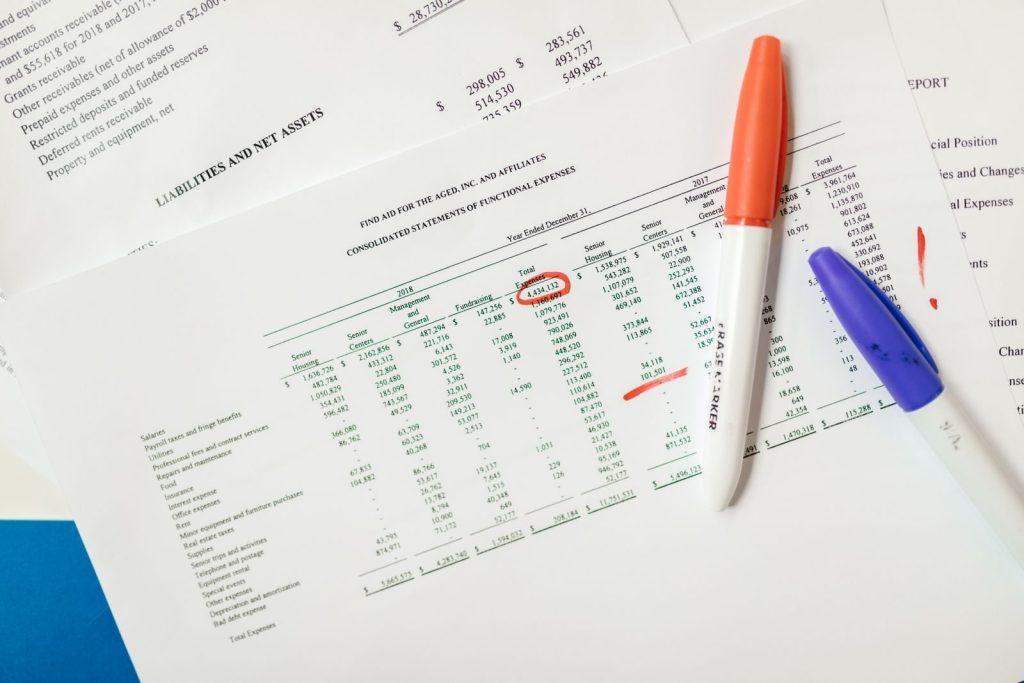
Deferred Tax Asset Validation Burndown
Introduction
Deferred tax assets (DTAs) represent a critical area of financial reporting that requires careful validation, particularly in Nigeria’s evolving tax landscape. Following the enactment of the Nigeria Tax Act (NTA) 2025, the assumptions underlying many deferred tax positions have fundamentally changed—and DTAs recognised under the old regime may no longer be recoverable .
The Deferred Tax Asset Validation Burndown is a structured methodology for systematically reassessing and closing the gap between your current DTA recognition and the requirements of IAS 12 under the new tax framework. The “burndown” concept applies agile project management principles to deferred tax validation: you map every temporary difference, reassess recoverability, and progressively eliminate unsupported positions until your DTA balance is defensible.
The stakes are significant. When tax laws change, IAS 12 requires the deferred tax impact to be recognised in equity (typically retained earnings) if it does not relate to a transaction recognised in profit or loss . Misstating DTAs affects reported profit, net assets, and key ratios—and auditors test these positions as part of every statutory audit.
At Qeeva Advisory, we understand that DTA validation requires technical expertise in both IAS 12 and Nigerian tax law. Our team helps Nigerian businesses reassess their deferred tax positions under the NTA 2025, apply valuation allowances correctly, and build computations that withstand audit scrutiny.
This comprehensive guide examines the Deferred Tax Asset Validation Burndown, covering the NTA 2025 changes, IAS 12 recognition criteria, common validation failures, and how Qeeva Advisory helps businesses achieve DTA accuracy.
The Pain Points: Why DTA Validation Matters Now More Than Ever
The NTA 2025 Regime Change
The NTA 2025 fundamentally altered the assumptions underlying deferred tax calculations. The removal of the Initial Allowance from capital allowance computation requires a reassessment of deferred tax balances. Under the old regime, accelerated capital allowance (initial + annual) created a temporary difference between the accounting carrying amount and the tax base of qualifying assets—resulting in a Deferred Tax Liability (DTL). With the new rule applying a straight-line annual allowance only, the tax base increases, thereby reducing or eliminating the temporary difference .
Existing DTLs may need to be reversed. New DTAs may become recognisable—or existing DTAs may need to be written down.
The Capital Loss DTA Opportunity
Capital losses are now deductible and can be carried forward for up to 5 years. However, DTA recognition is only permitted if you can demonstrate that you expect to generate sufficient chargeable gains within the 5-year window . Premature recognition risks restatement.
The METR Interaction
The 15% Minimum Effective Tax Rate (METR) may limit the benefit of certain deferred tax assets. The interaction between METR and DTA recognition requires careful review to avoid P&L surprises .
The Revaluation Surplus Adjustment
The CGT rate increase from 10% to 30% impacts deferred tax on revaluation surpluses for non-depreciable assets, recognised in OCI . Existing calculations that used the old rate are now incorrect.
The Valuation Allowance Discipline
A valuation allowance is recognised against deferred tax assets where it is not probable that taxable profit will be available to utilise the deductible temporary difference. Where cumulative losses exist and continued net operating losses are expected, a full valuation allowance is required . Businesses that fail to apply this discipline overstate assets and understate expenses.
Understanding the IAS 12 Recognition Criteria
The Core Principle
IAS 12 requires an entity to recognise a deferred tax asset for deductible temporary differences and unused tax losses to the extent that it is probable that taxable profit will be available against which the deductible temporary difference can be utilised .
“Probable” is a high threshold. It is not merely possible or plausible—it requires convincing evidence.
Two Routes to Recoverability
A DTA can be recovered in one of two ways :
Route 1: Reversal of Existing Taxable Temporary Differences
When deductible temporary differences reverse in future periods, they result in deductions from taxable profits. The economic benefits can only be realised if the entity earns sufficient taxable profits against which the deductions can be offset.
The future reversal of existing taxable temporary differences (the basis of a DTL) gives rise to an increase in taxable income. The DTA is recoverable to the extent that the taxable temporary difference relates to the same taxable entity, is assessed by the same taxation authority, and reverses in the same period .
Route 2: Future Taxable Profits
If there are insufficient taxable temporary differences, the next step is to consider whether recoverability is probable through future taxable profits. Management should consider the likelihood that sufficient taxable profits of the appropriate type will arise in the same period(s) as the reversal of the deductible temporary differences .
Evidence Requirements for Future Profits
There must be convincing evidence that sufficient taxable profits will be available in future to support DTA recognition where an entity is loss-making and there are insufficient suitable deferred tax liabilities. The existence of tax losses is strong evidence that future taxable profit might not be available .
A forecast or budget in itself does not provide convincing evidence. The forecast and underlying assumptions should be supported by reliable evidence. Management should give more weight to evidence that is objectively verifiable than to evidence that is subjective .
No Arbitrary Cut-Off
When considering whether there are sufficient future taxable profits, there should be no arbitrary cut-off in the time period over which an assessment of expected taxable profits is made. The recoverability test should not be limited solely because budget information is not available after a certain number of years .
The DTA Validation Burndown Methodology
Step 1: Map Your Deferred Tax Universe
Identify every temporary difference that gives rise to a DTA or DTL:
DTAs:
-
Unused tax losses carried forward
-
Unused capital losses carried forward (new under NTA 2025)
-
Deductible temporary differences on provisions
-
Deductible temporary differences on unrelieved interest (subject to 5-year lapse)
-
Other deductible temporary differences
DTLs:
-
Accelerated capital allowances (reassess under NTA 2025)
-
Revaluation surpluses (recalculate at new CGT rate)
-
Other taxable temporary differences
Step 2: Reassess Capital Allowance Temporary Differences
Under the NTA 2025, the removal of Initial Allowance significantly reduces or eliminates the temporary difference between accounting carrying amount and tax base of qualifying assets. Existing DTLs may need to be reversed .
Action: Recalculate the tax base of each asset using the new straight-line regime. Compare to the accounting carrying amount. If the temporary difference has reduced or disappeared, reverse the corresponding DTL.
Step 3: Validate Capital Loss DTAs
Capital losses can now support DTA recognition, but only if you can demonstrate probable future chargeable gains within 5 years .
Action: Prepare a schedule of expected chargeable gains by year. If gains are not probable within the 5-year window, do not recognise the DTA—or apply a valuation allowance.
Step 4: Recalculate Revaluation Surplus DTL
The CGT rate has increased from 10% to 30%. Deferred tax on revaluation surpluses for non-depreciable assets must be recalculated at the new rate, with the impact recognised in OCI .
Step 5: Assess METR Interaction
The 15% Minimum Effective Tax Rate may limit the benefit of certain DTAs. Review your positions to identify where METR could reduce the value of recognised DTAs .
Step 6: Apply Valuation Allowance Discipline
For each DTA, assess whether it is probable that taxable profit will be available. Where cumulative losses exist and continued net operating losses are expected, apply a full valuation allowance .
Step 7: Document and Disclose
Document the evidence supporting DTA recognition. IAS 12 requires disclosure of the nature of evidence supporting DTA recognition where the entity is loss-making and there are insufficient suitable deferred tax liabilities .
Step 8: Recognise the Transition Impact
When tax laws change, IAS 12 requires the deferred tax change to be recognised in equity (typically retained earnings) if it does not relate to a transaction recognised in profit or loss .
Entry for DTL reversal:
-
Dr Deferred Tax Liability
-
Cr Retained Earnings / OCI

The DTA Validation Checklist
Capital Allowance Temporary Differences
-
Tax base recalculated under NTA 2025 straight-line regime
-
Initial Allowance removed from computation
-
Obsolete DTLs identified and reversed
-
1% notional residual value accounted for
Capital Loss DTAs
-
Capital losses schedule prepared
-
Expected chargeable gains documented by year
-
5-year carry-forward window assessed
-
DTA recognised only where probable gains exist
Revaluation Surplus DTL
-
CGT rate updated to 30%
-
Deferred tax on revaluation surpluses recalculated
-
Impact recognised in OCI
Unrelieved Interest DTAs
-
Interest disallowance schedule maintained
-
5-year lapse risk assessed
-
DTA recognised only where utilisation is probable
Valuation Allowance
-
Recoverability assessed for each DTA
-
Cumulative loss position considered
-
Full valuation allowance applied where required
-
Evidence documented
METR Interaction
-
METR impact on DTA benefit assessed
-
Positions reviewed for potential P&L surprises
Disclosure
-
Nature of evidence supporting DTA recognition disclosed
-
Transition impact recognised in equity
-
Tax law change disclosures provided
Common DTA Validation Pitfalls
1. Ignoring the Initial Allowance Removal. Existing DTLs based on accelerated capital allowances may no longer be valid. Failing to reassess means overstating liabilities and understating equity .
2. Premature Recognition of Capital Loss DTAs. Capital losses can support DTA recognition only if probable future chargeable gains exist within 5 years. Recognising without evidence risks restatement .
3. Using the Old CGT Rate for Revaluation Surpluses. The CGT rate is now 30%, not 10%. Calculations using the old rate understate the DTL .
4. Failing to Apply Valuation Allowance. Where cumulative losses exist and continued losses are expected, a full valuation allowance is required. Omitting it overstates assets .
5. Ignoring METR Interaction. The 15% METR may limit DTA benefit. Failing to assess this creates P&L surprises .
6. No Disclosure of Evidence. IAS 12 requires disclosure of the nature of evidence supporting DTA recognition in loss-making situations. Omitting this is a compliance failure .
7. Recognising DTA Without Convincing Evidence. A forecast or budget alone is not convincing evidence. Objectively verifiable evidence carries more weight .
How Qeeva Advisory Helps with DTA Validation
At Qeeva Advisory, we understand that DTA validation under NTA 2025 requires technical expertise in both IAS 12 and Nigerian tax law. Our team helps businesses reassess their deferred tax positions, apply valuation allowances correctly, and build computations that withstand audit scrutiny.
Our Core Services
Deferred Tax Asset Validation Burndown – We help you reassess DTA recognition, recalculate temporary differences under NTA 2025, apply valuation allowances, and document evidence .
Capital Allowance Computation Burndown – The removal of Initial Allowance directly impacts deferred tax. We help you recalculate capital allowance temporary differences under the new straight-line regime .
Tax Advisory Services – We help you navigate the NTA 2025 changes, including capital losses, METR, and CGT rate impacts.
Financial Reporting Advisory – We help you prepare accurate deferred tax disclosures and recognise transition impacts correctly.
ICFR Advisory Service – Deferred tax recognition is a key control area. We help you design controls that ensure accurate DTA validation.
Bookkeeping Services – Accurate fixed asset and tax records are the foundation of correct deferred tax computations.
Advisory Services Nigeria – Our advisory professionals provide guidance on tax planning and regulatory compliance.
Our DTA Validation Methodology
Phase 1: DTA Diagnostic – We review your deferred tax balances, temporary differences, and supporting documentation against NTA 2025 requirements.
Phase 2: Capital Allowance Recalculation – We recalculate tax bases under the new straight-line regime and identify DTLs requiring reversal .
Phase 3: Capital Loss Assessment – We assess whether probable future chargeable gains exist within the 5-year window to support DTA recognition .
Phase 4: Revaluation Surplus Adjustment – We recalculate DTLs on revaluation surpluses at the new 30% CGT rate .
Phase 5: Valuation Allowance Review – We assess recoverability of each DTA and apply valuation allowances where required .
Phase 6: METR Interaction Assessment – We review the impact of the 15% METR on DTA benefit .
Phase 7: Documentation and Disclosure – We prepare supporting documentation and IAS 12 disclosures.
Frequently Asked Questions
Q: What is a Deferred Tax Asset Validation Burndown?
A: It is a structured methodology for systematically reassessing and closing the gap between your current DTA recognition and the requirements of IAS 12 under the NTA 2025 .
Q: How does NTA 2025 affect deferred tax?
A: The removal of Initial Allowance from capital allowance computation requires reassessment of deferred tax balances. The tax base increases, reducing or eliminating temporary differences that previously gave rise to DTLs. The CGT rate increase from 10% to 30% also impacts deferred tax on revaluation surpluses .
Q: Can I recognise DTA on capital losses?
A: Yes, potentially. Capital losses are now deductible and can be carried forward for up to 5 years. However, you must demonstrate that you expect to generate sufficient chargeable gains within the 5-year window .
Q: When is a valuation allowance required?
A: A valuation allowance is recognised against deferred tax assets where it is not probable that taxable profit will be available to utilise the deductible temporary difference. Where cumulative losses exist and continued net operating losses are expected, a full valuation allowance is required .
Q: What evidence supports DTA recognition?
A: There must be convincing evidence that sufficient taxable profits will be available. A forecast or budget alone is not convincing. Objectively verifiable evidence carries more weight than subjective evidence .
Q: How should the NTA 2025 deferred tax change be recognised?
A: When tax laws change, IAS 12 requires the deferred tax change to be recognised in equity (typically retained earnings) if it does not relate to a transaction recognised in profit or loss .
Q: What is the METR interaction with DTAs?
A: The 15% Minimum Effective Tax Rate may limit the benefit of certain deferred tax assets. Review your positions to avoid P&L surprises .
Q: How can Qeeva Advisory help with DTA validation?
A: We provide DTA diagnostics, capital allowance recalculation, capital loss assessment, valuation allowance review, METR interaction assessment, and documentation support .

The Bottom Line
Deferred tax asset validation is a critical financial reporting discipline that has become even more important with the enactment of the NTA 2025. The removal of Initial Allowance, the CGT rate increase, and the introduction of the 15% METR all require businesses to reassess their deferred tax positions .
Key Takeaways:
Reassess Capital Allowance Temporary Differences – The removal of Initial Allowance significantly reduces or eliminates the temporary difference between accounting carrying amount and tax base of qualifying assets. Existing DTLs may need to be reversed .
Validate Capital Loss DTA Carefully – Capital losses can now support DTA recognition, but only if you can demonstrate probable future chargeable gains within 5 years. Premature recognition risks restatement .
Apply Valuation Allowance Discipline – DTAs should only be recognised to the extent that it is probable that taxable profit will be available. Cumulative losses may require a full valuation allowance .
Recalculate Revaluation Surplus DTL – The CGT rate increase to 30% requires recalculation of deferred tax on revaluation surpluses for non-depreciable assets, recognised in OCI .
Review METR Interaction – The 15% Minimum Effective Tax Rate may limit the benefit of certain deferred tax assets. Review your positions now to avoid P&L surprises .
Your job is to be prepared. Understand the NTA 2025 changes. Validate your deferred tax assets. Apply IAS 12 recognition criteria. Seek professional guidance.
With the right approach and the right partner, you can turn deferred tax validation from a compliance risk into a demonstration of reporting discipline.
Suggested Reading from Our Blog
Deferred Tax Asset Validation Burndown – Complete guide to the DTA validation process, including NTA 2025 realignment, capital loss DTA, and valuation allowance discipline .
Capital Allowance Computation Burndown – Complete guide to the new capital allowance regime under NTA 2025, including removal of Initial Allowance and the three-tier classification system .
Capital Allowance Under the Nigeria Tax Act 2025 – Detailed guidance on the new regime, asset classification, and CAFA requirements.
Tax Advisory Services – We help you navigate Nigeria’s tax system, including NTA 2025 changes.
Financial Reporting Advisory – We help you prepare accurate deferred tax disclosures.
ICFR Advisory Service – Deferred tax recognition is a key control area. We help you design controls for accuracy.
The Importance of Accurate Financial Reporting – ICFR certification and reporting integrity.
Advisory Services Nigeria – Guidance on tax planning and regulatory compliance.
Reference Links / Sources
Qeeva Advisory – Deferred Tax Asset Validation Burndown – NTA 2025 realignment, capital loss DTA, valuation allowance, and METR interaction .
Qeeva Advisory – Capital Allowance Computation Burndown – New capital allowance regime and temporary differences .
Qeeva Advisory – Capital Allowance Under NTA 2025 – Asset classification and CAFA.
Qeeva Advisory – Tax Advisory Services – Tax compliance and planning.
Qeeva Advisory – Financial Reporting Advisory – Deferred tax disclosures.
Qeeva Advisory – ICFR Advisory Service – Controls for deferred tax recognition.
Qeeva Advisory – The Importance of Accurate Financial Reporting – Reporting integrity.
Qeeva Advisory – Advisory Services Nigeria – Tax planning and compliance.
Let’s Talk About Your DTA Validation Needs
Validating deferred tax assets under NTA 2025 is essential for accurate financial reporting and audit readiness. At Qeeva Advisory, we understand the challenges faced by Nigerian businesses in reassessing their deferred tax positions.
Whether you need help with capital allowance recalculation, capital loss assessment, valuation allowance review, or METR interaction, we are here to support you.
📞 Call us: (+234) 802 320 0801, (+234) 807 576 5799
📧 Email: info@qeeva.com
📍 Visit us: 5, Ishola Bello Close, Off Iyalla Street, Alausa, Ikeja, Lagos, Nigeria
Contact us today to schedule a DTA validation consultation. Let us help you achieve deferred tax accuracy with confidence.
Your journey to reporting integrity starts with a conversation. Let’s talk.